Sunday, March 15, 2026

Book Review: TAIWAN TRAVELOGUE by Yang Shuang-zi

Taiwan TravelogueTaiwan Travelogue by Yáng Shuāng-zǐ
My rating: 4 of 5 stars

"Even though I cannot open my heart, the feelings that I hold within this shuttered heart are, nonetheless, real."

Sometimes we meet people and possible futures open up, giving joy at imagining despite knowing it could never be.

This theme of longing for the unreachable sang through my first read from this year's International Booker Prize long list. It really should come with a warning on the cover: Only read while eating.

Our protagonist is a Japanese writer on a year-long visit to Taiwan in 1938, back when it was still Formosa and under Japanese colonial rule, as part of Nihon's Southern Expansion Policy.
She finds more than friendship in her female translator, and forms an attachment so strong and yet, on paper, so pure. Their affinity, however, is marred by a nameless tension hinted at in early chapters, then culminates in a reveal that shows how powerful historical/cultural forces can be in both shaping identities and tearing kindred spirits apart.

What I initially thought would be a food-filled travelogue turned out to be a meaty investigation of colonialism's many layers.

Not only will this whet your appetite for Taiwan's cuisine (there is a banquet scene that will linger in memory, filling the reader with phantom sensations of dining on crispy duck, bamboo shoots and pork belly, and dumplings filled with everything from diced winter melon to fried shallots and cilantro) and her many temples and trains, but it will also remind you of people who cross your path for a very short time, yet forever change your soul.

View all my reviews

Thursday, February 5, 2026

Book Review: ALL THE BEAUTY IN THE WORLD by Patrick Bringley

All the Beauty in the World: The Metropolitan Museum of Art and MeAll the Beauty in the World: The Metropolitan Museum of Art and Me by Patrick Bringley
My rating: 4 of 5 stars

“The picture is so beautiful, so tenderly flush with life that it seems to be itself living… it looks as whole, bright, irreducible, and unfading as I would wish the human soul to be.”

Patrick Bringley lost his brother to cancer. To cope with the grief, he became a security guard at the Metropolitan Museum of Art in New York. Then he wrote a book about it, which has now been turned into a one-man play.

Books truly find us at the right time.

I read “All the Beauty in the World” in bits and pieces through an incredibly busy, historic week. And if I had read it any other time with greater leisure, I suspect it would have had less of an impact.

But as it was, I took greedy gulps from its waters of calm and introspection, finding it both wise and urgent.

I am a teacher running out of time.

One of the subjects I have handled (for a decade now!) is Contemporary Philippine Art in the Regions (CPAR). There’s a chance I won’t be teaching it next school year, due to an impending curriculum change.

And honestly, I have not had time to mourn.

All I know is, on what could very well be the final semester that I am handling the subject, I am filled with a sort of urgency, bordering on despair, but overwhelmingly still aflame to prove that the arts matter. That studying the legacy of our National Artists matter. That bringing our students to the theater, that helping them sing and dance, and act in the annual school play matters.

Next week, I shall be with our school’s senior high students on a field trip to two museums, and I wish I had author Patrick Bringley’s knowledge to share. I hope love (and my own imperfect knowledge) will suffice.

For Bringley, art is “an Adoration… How useful a name for a kind of tender worship that arises in such a moment. We are silenced by such a vision, softened, made penetrable by what is vibrant and unhidden but felt only weakly amid the clamor of everyday life.”

He has a favorite kind of museum visitor, the “rare person, one who doesn’t pretend knowledge or fear ridicule, who throws the gates of his mind wide open and invites a battalion of new ideas to crash in.”

The memoir takes us through ten years of making a living being with art, and making a life and a family afterwards. Struggling with his newborn as a first time dad, Bringley writes: “I marvel at the moment’s vibrancy. Not only is this beautiful, I think, this is good, its goodness subsuming the struggles… I am building two little humans; and I am making the little world I would wish them to live in.”

He writes of what he reads the masters do, and takes heart that the great Michelangelo struggled with the Sistine Chapel, even writing down: “I am not in a good place. And I am no painter.”

When I think of the impact that great books, paintings, songs, and plays have had on me, I come away with a sense of gratitude, and an overwhelming desire to pass it on. To infect others with this deep, profound joy.

Why post about what we read or watch, or see? For this simple reason: to spread our immense happiness. The Lord knows the world desperately needs more of it.

View all my reviews

Friday, January 2, 2026

Book Review: THE BUFFALO HUNTER HUNTER by Stephen Graham Jones

The Buffalo Hunter HunterThe Buffalo Hunter Hunter by Stephen Graham Jones
My rating: 5 of 5 stars

"What I am is the Indian who can't die. I'm the worst dream America ever had."

My first five-star-read-that-I-shall-try-to-shove- down-everybody's-throat book for 2026 is a historical novel that also happens to be literary fiction and horror. "Butcher's Crossing" meets Anne Rice in a Native American (specifically, Pikuni) revenge fantasy that rings true ... because it is.
The Buffalo Hunter Hunter is a multi-generational tale of the white man's greed and cruelty, and the vengeance that takes the form of the Nachzerer, with a penchant for visiting Lutheran churches to confess to its pastor. Stephen Graham Jones has written, with masterful technique, a novel that I hesitate to call a "vampire thriller," though it is, decidedly, both thrilling and features the undead.

It is so much more than its marketing labels.

It is written in three different voices to match the three main characters, utterly convincing in their tone and word choice despite being apart culturally and in centuries. The novel is also a metaphor for the corruption of "America," from the time of Lewis and Clark, and reminds its reader of the true horrors of the Marias Massacre (also known as the Baker Massacre), and the Starvation Winter brought about by excessive killing of buffalo.

"In all of my stories I'm crying... This, I believe, is the story of America, told in a forgotten church in the hinterlands, with a choir of the dead mutely witnessing."

Despite its 450 page length, this is a rousing epic, with a story that will live inside this reader for years to come, that leaves one breathless with awe. Such is the power of the written word: to keep whitewashed history alive, using commercial literature to tell it to as many people as possible. In this way, the author has ensured that the great evil done to his forefathers will never be forgotten.

View all my reviews

Monday, November 10, 2025

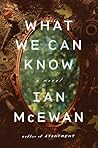
Book Review: What We Can Know by Ian McEwan

What We Can KnowWhat We Can Know by Ian McEwan
My rating: 4 of 5 stars

“The spoken or written poem was as old as literature, perhaps as old as speech, with roots in song, in the rhythms of daily life and the body’s pulse, in the hunger to catch the passing moment and to glorify love… it was the poets who made the book of life.”

What We Can Know is Ian McEwan’s latest book, and what I do know is, I have this compulsion to read every book of his. This novel is perhaps the furthest thing from a comfort read. McEwan’s is a brilliant mind that looks at our changing world and writes stories that place contemporary challenges beside messy human nature: chaos controlled in the tidy safety box that a good novel is.
 
Written in two parts, the first one depicts a dystopia set in 2119, where the remnants of civilization are dealing with a post-nuclear war landscape almost entirely taken over by water. AI and the internet are controlled by governments and run as a public service, the global leader is Nigeria, and to be purely Caucasian is to be a minority. And yet a literature professor still seeks a famous lost poem written over a century ago: the pursuit of art in the face of global near-destruction, the brave mission of a scholar soldiering on in a world greatly diminished.

To be frank, the first act was a bit of a drag for this reader, as it depicted a future world all too plausible, and horrible to imagine in reality. But the second half of the novel is where McEwan metaphorically gripped my throat in the chokehold of a good mystery thriller.

What was initially a search for a literary treasure turns into an account of the lives of the author and his friends and family, and it becomes far more than a poet presenting his wife with a birthday corona (apparently the supreme test for an author, as it is a kind of poem that requires technical brilliance to write).

There is passion, both tender and illicit. There is death and decay, both physical and moral, as lovers live and part, and try to write books and think of art in a vain attempt to elevate themselves from the animal within. And despite the numerous emails and text messages that surround the events, McEwan shows that this “theft of privacy” still cannot reveal the hidden shadows of the human heart.

The last chapters are unforgettably tense, and if this were a mere suspense thriller the time reading it would have been well spent. But all throughout, McEwan writes of the present through the lens of a future generation, and manages to both sound a warning and pen a love letter to our contemporary, crazy way of life.

We cannot know what the future holds for certain, but in this book, McEwan sings his song of endurance: that humanity, its sins and weaknesses, its art and poetry, will survive all that is to come.

“The weapons proliferated and they did little, even as they knew what was coming and what was needed. Such liberty and abandon, such fearful defiance. They were brilliant in their avarice, quarrelsome beyond imagining, ready to die for bad and good ideas alike… In the stampede, grisly government secrets were spilled, childhoods despoiled, honourable reputations trampled down and loud-mouthed fools elevated… the past from which I too am excluded, the past that from here seems whole and precious, when many of humanity’s problems could have been solved. When too few understood how sublime their natural and man-made worlds were… not only a lament for what we have mindlessly killed, but a passionate reminder of what is still there and must be loved.”

View all my reviews

Thursday, October 30, 2025

Book Review: The Blind Earthworm in the Labyrinth

The Blind Earthworm in the LabyrinthThe Blind Earthworm in the Labyrinth by Veeraporn Nitiprapha
My rating: 4 of 5 stars

I was led to this book by real people, and not the algorithm that prioritizes books published by The Big Five. If I hadn’t seen this book being passed on from one lifelong reader to another with a discernible air of excitement, I wouldn’t even have known that this Thai book existed. If the theme of our book club (Ex Libris Philippines) hadn’t been Southeast Asian literature, I might have prioritized others in my TBR pile and not this one published by River Books. The literary landscape is so much more diverse than the shelves of local bookstores might show, and when a book is this good, I hope local bookstores stock it.

Veeraporn Nitiprapha’s (วีรพร นิติประภา) “The Blind Earthworm in the Labyrinth” ( ไส้เดือนตาบอดในเขาวงกต) is only the second Thai novel I’ve read thus far, apart from “Bangkok Wakes to Rain” by Pitchaya Sudbanthad. This was her first novel of two that have won the S.E.A. Write Award, and it’s easy to see why from the very first page. Kong Rithdee’s English translation sings and dances, unveiling this heartbreaking tale of so many different melodies and flavors of love with a sensuality that bathes the reader in the smells and sounds of the area around Bangkok and Nakhon Chai Si.

Nitiprapha’s book is about love and desire, and the suffering it creates. We are warned at the end of the very first chapter, that this is “when the voyage of tears began.” While the focus is on the heartaches of two beautiful sisters and their foster brother who falls in love with each of them in turn, Nitiprapha also tells us of the love affairs of the supporting cast: the lady who cooks and cleans for them and her five children by three fathers, the sisters’ parents bound in a miserable marriage, their uncle who falls in love with treasure hunting for ancient cloth, the lying boyfriend addicted to the toxic cycle of separation and return, and others.

There is a hint of feminism and the subversive in the way the author uses political uprisings as markers in the characters’ timelines, and how the women are portrayed in a more sympathetic light than the men. I also found it fascinating how the author never put quotation marks when her characters spoke, only italicizing their words. It made me feel as if I was reading their most intimate thoughts.

All throughout the book, I kept thinking how very Buddhist it seemed to this Christian reader. If the goal was to document the different agonies of yearning, then this book more than succeeds: it just might scare people off from succumbing to the universal pull of this cosmic dance. One character escapes by becoming a monk, taking to heart the Buddha’s teachings on the Four Noble Truths: We escape suffering by getting rid of desire.

And yet, despite its overwhelming melancholy, the book so keenly rejoices in the pleasures to be found in quickened heart beats, in the joys of living.

Despite the not-so-cheerful stories within, there is much to delight every sense in the book’s wealth of Thai food, flora, and landscapes. Reading this brought happy memories back of a visit to the land of temples and river ferries, food so fresh and tasty wherever one bought it from, and a country that at first glance may seem familiar to this Manila girl, but retains such a distinct sense of self.

(As a music major, I also loved the play list at the end, which lists the specific songs playing in chapters of the book, an overwhelming majority of which are classical. Beethoven’s Violin Sonata in F Major, Op. 24 is listed as “Music to make the gardenias blossom,” and the modernist L’arbre des songes by Henri Dutilleux is “Music to make you forget your homework.” And as for the Requiem in D minor, K. 626 by Mozart? “Proof of God’s existence.”)

Nitiprapha’s sheer skill in setting down every single taste, smell, and yes, even the background music of every scene, and yet keep the reader fully immersed in the narrative and the unfolding of the emotions in every chapter, is breathtaking.

I’m grateful to have read this ode to love that produces life, to the hearts that break yet keep loving in Bangkok. And I hope more folks get to read this memorable flower of a book as well.


View all my reviews

Monday, October 27, 2025

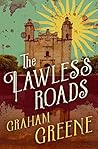
Book Review: The Lawless Roads by Graham Greene

The Lawless RoadsThe Lawless Roads by Graham Greene
My rating: 3 of 5 stars

“One came to believe in Heaven because one believed in hell.”

Once upon a time, around a hundred years ago, Catholicism was made illegal in Mexico. During the Calles persecution (aka Cristero War), priests were exiled or executed (or hid in forests and swamps for years), while churches and schools were closed down. For decades, baptisms and consecration of the dying were forbidden, and any house where nine or more gathered for mass was automatically transferred to the government.

Enter Graham Greene, whose 1938 trip throughout Mexico inspired one of his great Catholic novels, “The Power and The Glory” (1940). From Tabasco and Chiapas, to Oaxaca and Veracruz, Greene wrote about the scars left on the land and its people. Greene hates Mexico for the discomfort, the food that made him ill, and the casual violence all around. But at the same time, what comes across is a deep respect for the religiosity he bore witness to. “Here, one felt, was a real religion.”

Even in nonfiction, Greene’s skill for finding God in the ugly and unlikeliest people and places is evident. “This was the population of heaven - these aged, painful, and ignorant faces: they are human goodness.”

All sorts of misadventures occur: he interviews a general for a paper, travels on mules over mountains, seeks reprieve from loneliness by speaking with all who cross his path.
He finds various forms of Catholicism, from the gaudy golden cathedrals (“It was a place for prelates, not for prayer”) to the mountains where Indians committed minor massacres one day, then worshipped the next in churches bereft of the host. He finds a town where the voice of a saint “miraculously” speaks out of a wooden box, and visits a hidden convent with a mass grave, only discovered by crawling through a tiny hole in a wall.

It is perhaps the most unusual travelogue this reader has encountered, one written as if with the intent to scare away visitors, instead of encouraging them to come and visit. Greene’s Mexico is a grace-less place where farmers prostrate themselves on the ground with arms outstretched like a fallen Christ, and women crawl to the altar on their knees for salvation more desperately sought in fallen times. “The Lawless Roads” offers a vision of hell on earth, yet with glimmers of heaven, still.

View all my reviews

Tuesday, October 14, 2025

Book Review: Katabasis by R. F. Kuang

KatabasisKatabasis by R.F. Kuang
My rating: 4 of 5 stars

There was so much hype about RF Kuang's sixth novel. Manila International Book Fair visitors will remember that National Bookstore had a huge display of the book (along with the new Dan Brown). Bookish folk were pre ordering left and right (yours truly included). And even before the book came out, a TV series deal with Amazon was already struck.

I confess that, upon reading the first couple of chapters, I was a bit put off. Dialogue and tone came across as very simplistic, almost like a YA novel; something I hadn't expected of an RF Kuang book about Cambridge PhD students chasing their thesis adviser thru Hell.

And so I put it down for several weeks, until I was compelled to pick it up again when I saw how lonely it looked on my desk. A few more chapters in, then BLAM! SOMETHING HAPPENED that involves what my twin and I call the "vile vetrayal" trope (spelling intended) 🤣 in our favorite romances. And then I was tearing through the pages, caught up in a frenzy of NEEDING TO KNOW HOW IT ENDS. RIGHT. THIS. INSTANT.

And so, to those who find themselves struggling through the first couple of chapters... I say, SOLDIER ON! It's worth it. This is by RF Kuang, after all. And although I much prefer her epic #poppywar series over this and her other books (the angrier Babel and the more satirical Yellow Face), Katabasis is still a pretty good read where you'll have fun and, like it or not, learn a lot along the way. It's one thick love letter to learning and libraries, while frankly discussing the shadowy side of academia.

I'd recommend it for readers who are at least college age, as Kuang references a lot of classical literature, philosophy, history, and mythology. And some of the themes in the book get pretty dark (as befits the premise of descending into the realm of the dead). Shan't list any trigger warnings as I don't want to spoil. But don't worry! Kuang simplifies the real-life scholarly references in very accessible language. And despite its bleak moments, it's ultimately a joy to read, and never becomes overly academic or dry.

Kuang continues to blend scholarship and great storytelling in her latest, and I can't wait to read whatever she comes up with next.

View all my reviews